Is IQ Dependent on Genes?
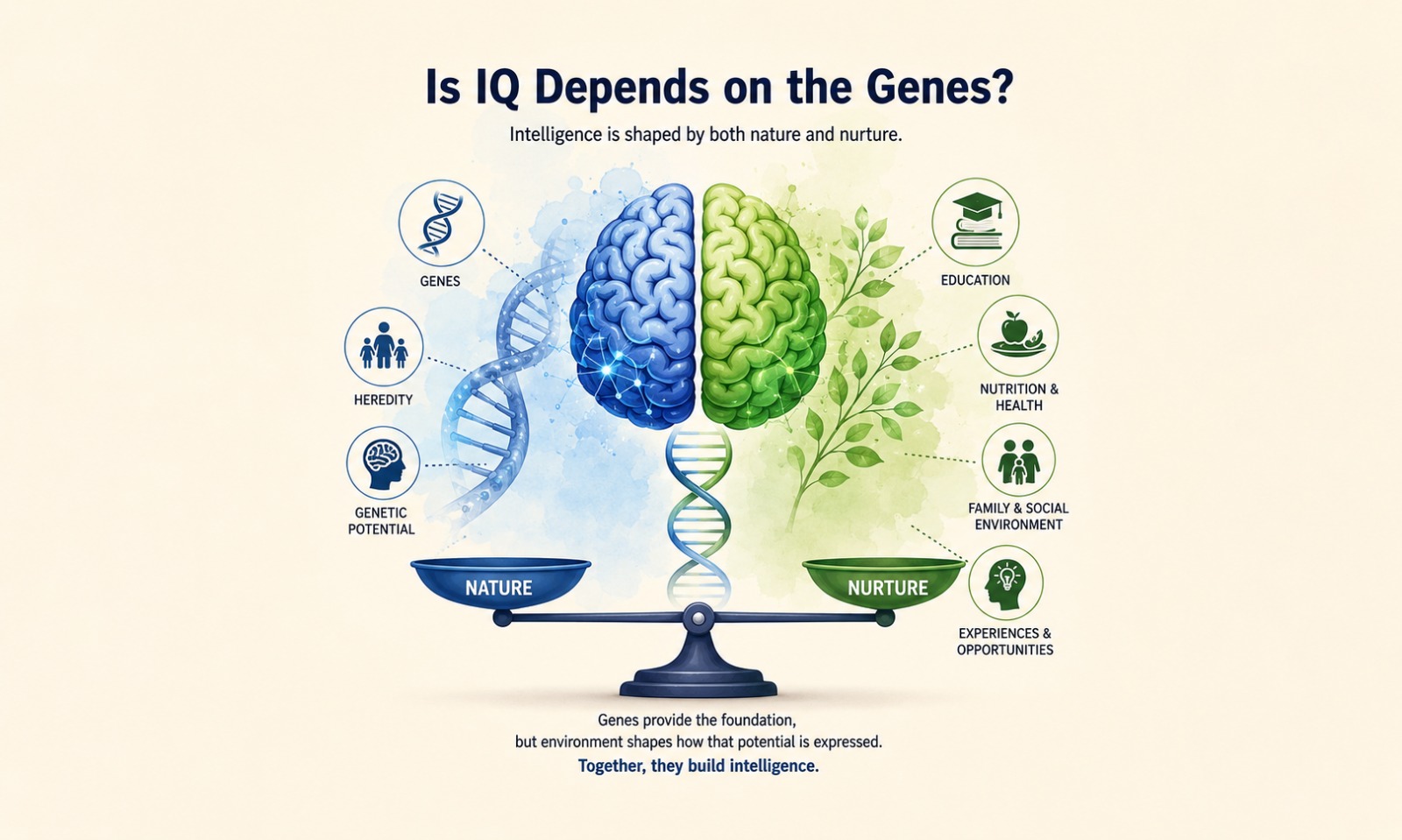
A supportive and emotionally stable environment helps children build confidence and curiosity. On the other hand, chronic stress, neglect, or lack of emotional support can affect mental development and academic performance. Children who grow up in intellectually stimulating environments generally develop stronger language skills and problem-solving abilities. Can IQ Be Improved? Many people assume IQ is fixed from birth, but modern research suggests intelligence can change over time. While genetics sets a certain range of potential, lifestyle and learning experiences can influence where a person falls within that range. Activities such as reading, solving puzzles, learning new skills, practicing mathematics, and engaging in creative thinking can strengthen cognitive abilities. Brain training, regular exercise, meditation, and healthy sleep patterns may also contribute to better mental performance. Although dramatic increases in IQ are uncommon, consistent mental stimulation can improve focus, memory, and analytical thinking. Myths About IQ and Genetics Myth 1: High IQ Guarantees Success A high IQ can help in academics and problem-solving, but success also depends on discipline, communication skills, emotional intelligence, creativity, and hard work. Myth 2: Intelligence Comes Only From the Mother Some people believe IQ is inherited only from the mother. While certain genes related to intelligence may be linked to the X chromosome, intelligence is influenced by many genes from both parents along with environmental factors. Myth 3: IQ Cannot Change Research shows that experiences, education, and lifestyle can influence cognitive abilities throughout life. The brain remains adaptable and capable of learning. The Balance Between Nature and Nurture The debate about whether IQ depends on genes is not a question of one side being correct and the other wrong. Intelligence develops through the interaction of genetics and environment. Genes may provide the foundation, but environment shapes how that potential is expressed. Two individuals with similar genetic potential may develop very different intellectual abilities depending on their education, opportunities, motivation, and life experiences. In simple terms, genetics loads the gun, but environment pulls the trigger. Conclusion IQ is influenced by genes, but it is not controlled entirely by them. Scientific studies clearly show that heredity plays a significant role in intelligence, yet environmental factors such as education, nutrition, emotional support, and personal effort are equally important in shaping cognitive abilities. Rather than focusing only on inherited intelligence, society should emphasize learning, curiosity, and personal growth. Every person has the ability to improve their knowledge, develop skills, and achieve success through dedication and continuous learning. Intelligence is not just about the number on an IQ test. True intelligence also includes creativity, adaptability, emotional understanding, and the willingness to keep learning throughout life.