Why Are ISRO's 200 Scientists Leaving?
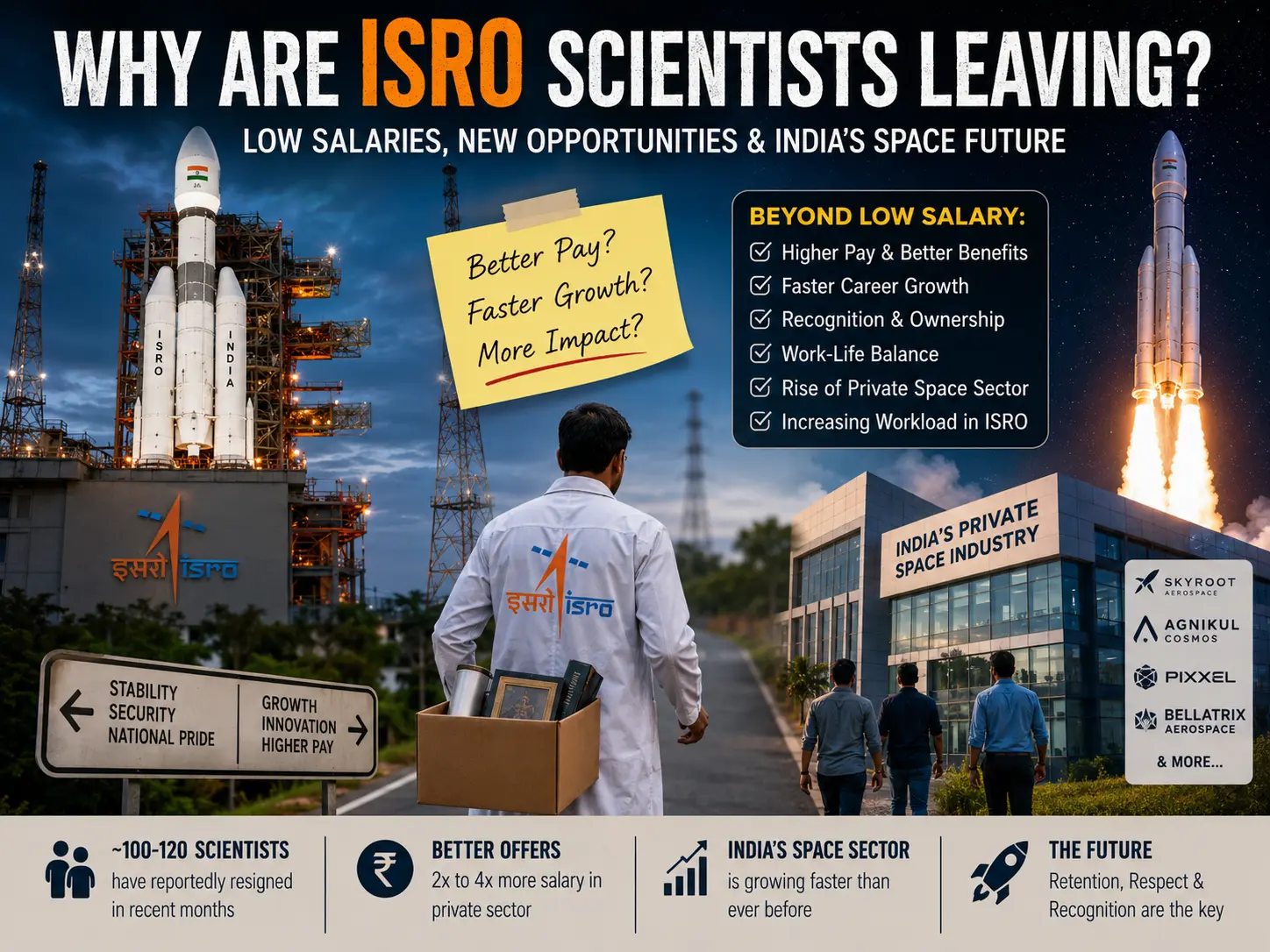
The Indian Space Research Organisation (ISRO) has long been regarded as one of India's greatest scientific institutions. From launching satellites at record-low costs to historic missions like Chandrayaan-3, Mangalyaan, and the upcoming Gaganyaan human spaceflight programme, ISRO has become a symbol of innovation, dedication, and national pride. However, recent reports have sparked concern across the country. Media reports indicate that more than **100 scientists**, with some estimates ranging between **100 and 120**, have resigned from ISRO in recent months. Social media posts have exaggerated this figure to **200 scientists**, often claiming that all left solely because of low salaries. While compensation is an important factor, the reality is far more complex. This article explores what is actually happening, why scientists are leaving, and what this means for India's future in space exploration. # What Happened? During July 2026, multiple media outlets reported that over 100 scientists associated with ISRO's flagship missions—including Gaganyaan and other strategic programmes—had resigned or sought voluntary retirement. The sudden increase in departures prompted the Department of Space (DoS) to tighten resignation approval rules. Earlier, directors of individual ISRO centres could approve many resignation requests. Under the revised policy, resignations and voluntary retirement requests from scientists involved in critical national missions now require approval at the Department of Space level. The objective is to reduce the loss of experienced personnel working on strategically important projects. # Is It Really About Low Salaries? Salary is certainly one factor, but it is not the only reason. Several reports suggest that experienced ISRO scientists can significantly increase their earnings by joining India's rapidly expanding private space companies. Startups and aerospace firms often offer: * Much higher salaries * Performance-based bonuses * Employee stock ownership (ESOPs) * Faster promotions * Greater flexibility * Opportunities to lead new technologies Many scientists spend years developing expertise in propulsion systems, satellite engineering, avionics, guidance systems, artificial intelligence, and launch vehicle technologies. These specialised skills are now highly valued by private companies. Consequently, many professionals find it difficult to ignore offers that may provide two to four times their government salary, along with better long-term financial growth. # The Rise of India's Private Space Industry India's space sector has changed dramatically since its liberalisation. Following government reforms, private companies are now allowed to build rockets, satellites, launch services, and space technologies with regulatory support from IN-SPACe. Companies such as Skyroot Aerospace, Agnikul Cosmos, Pixxel, Bellatrix Aerospace, and several others are creating exciting opportunities for engineers and scientists. Interestingly, many of these startups were founded by former ISRO scientists themselves. Their experience gained within ISRO is now helping build India's commercial space ecosystem. Rather than representing a "brain drain" to foreign countries, many resignations actually represent a movement from the public sector into India's own growing private space industry. # Recognition and Career Growth Another recurring concern is career progression. Government organisations generally have structured promotion systems based largely on seniority and administrative procedures. While these systems provide stability, they may not always reward exceptional performers quickly. Private companies, on the other hand, often offer: * Leadership roles at younger ages * Faster decision-making * Greater ownership of projects * Higher visibility for innovative work * Better financial incentives For ambitious scientists eager to accelerate their careers, these opportunities can be highly attractive. # Increasing Workload ISRO today is managing one of the most ambitious mission pipelines in its history. Current and upcoming projects include: * Gaganyaan Human Spaceflight Mission * Chandrayaan follow-up missions * Mars exploration plans * Advanced launch vehicles * Earth observation satellites * Navigation satellites * Commercial launch services * Space station planning At the same time, reports indicate that the Department of Space is facing a major manpower shortage, with nearly 30% of sanctioned positions remaining vacant. This means existing scientists often carry heavier workloads while handling increasingly sophisticated missions. # Government's Response Recognising the importance of retaining experienced talent, the Department of Space has introduced stricter approval procedures for resignations involving scientists e